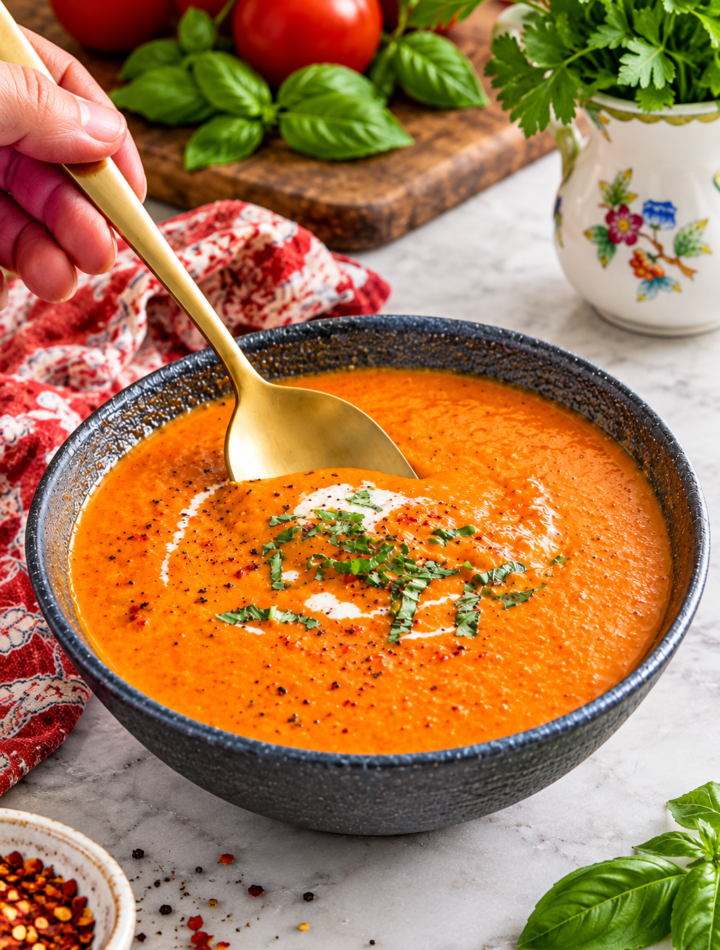
If you want a tomato soup that tastes like it has been simmering all afternoon, but without spending hours at the stove, this easy tomato soup recipe is a great place to start. Instead of cooking the tomatoes in a pot from the beginning, this version roasts the vegetables until they become soft, caramelized, and deeply flavorful. Everything then goes back into the baking dish with stock before being blended into a smooth, creamy soup.
The recipe is inspired directly by the provided recipe card: tomatoes, red onion, red pepper, garlic, basil, oregano, olive oil, chili flakes, brown sugar, stock, cream, and Parmesan. The original card specifies 220°C roasting, 30–35 minutes, 15 minutes of prep, and 4 servings.
One important detail: the image lists both vegetable and chicken stock while describing the soup as meat-free. If you want to keep it vegetarian, choose vegetable stock.
For the missing ingredient quantities that aren’t stated on the card—such as the amount of stock, cream, Parmesan, and olive oil—I’ve clearly labeled practical suggested amounts below rather than pretending those measurements came from the original image.
Recipe at a Glance
Recipe: Easy Roasted Tomato Soup
Prep Time: 15 minutes
Roasting Time: 30–35 minutes
Additional Baking: About 10 minutes
Total Time: About 55–60 minutes
Servings: 4
Oven Temperature: 220°C / 425°F
Cuisine: Italian-inspired
Course: Soup
Best For: Lunch, light dinner, or a cozy side dish
Why This Tomato Soup Tastes Different
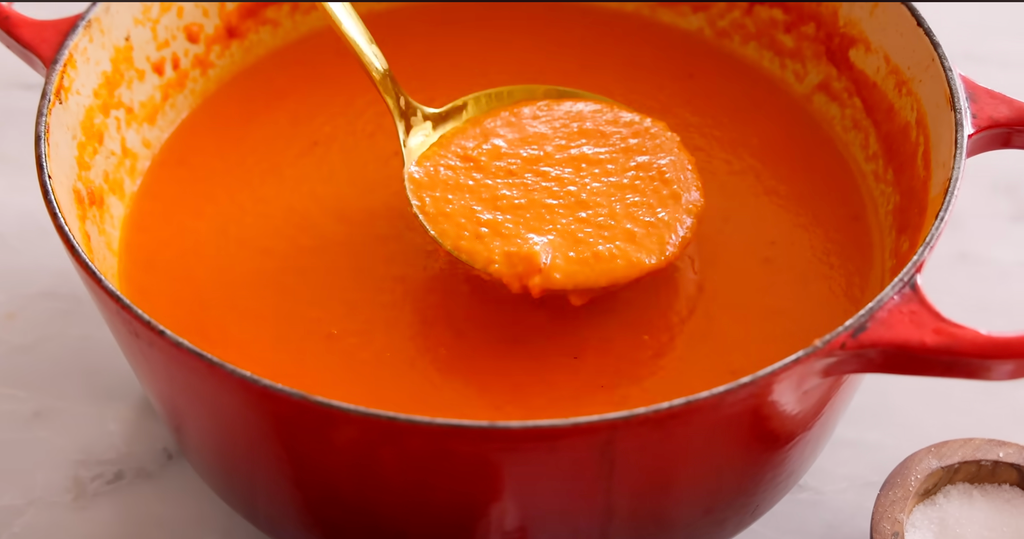
There is a big difference between simply boiling tomatoes and roasting them first.
When tomatoes, onion, red pepper, and garlic spend time in a hot oven, their natural moisture reduces while their flavors become more concentrated. The edges begin to caramelize, the onion turns sweeter, and the red pepper develops a deeper roasted flavor.
That gives this tomato soup recipe a richer character without requiring a long list of complicated ingredients.
The small amount of brown sugar also has a purpose. It can round out the sharpness of tomatoes, especially if the tomatoes are slightly acidic. You don’t want the finished soup to taste sugary—the goal is balance.
Fresh basil and oregano give it the Italian-inspired character shown in the recipe card, while Parmesan and a splash of cream make the finished soup smoother and more luxurious.
Ingredients for Easy Tomato Soup
Main Ingredients
- 4–5 large tomatoes
- 1 red onion
- 1 red bell pepper
- 6 garlic cloves
- Fresh basil, plus extra for serving
- Oregano, to taste
- Chili flakes, optional
- Olive oil, for drizzling
- Salt and black pepper, to taste
- A small amount of brown sugar
- Vegetable stock or chicken stock
- A splash of cream
- Parmesan cheese
Suggested Quantities for the Ingredients Without Measurements
The supplied recipe card does not give exact measurements for several ingredients. For a practical 4-serving batch, you can start with:
- 2–3 tablespoons olive oil
- 1 teaspoon dried oregano
- ¼–½ teaspoon chili flakes
- ½–1 teaspoon brown sugar
- 2 cups vegetable stock
- ¼–½ cup heavy cream or cooking cream
- ¼–½ cup finely grated Parmesan
These are suggested working quantities, not measurements stated on the original recipe card. Start conservatively and adjust after blending.
If your tomatoes are naturally sweet and flavorful, you may need very little brown sugar.
How to Make Tomato Soup
1. Prepare the vegetables
Start by washing the tomatoes and red pepper. Cut the tomatoes into large chunks and roughly chop the red onion and red pepper.
Peel the garlic cloves.
You don’t need perfectly uniform pieces here. Everything will eventually be blended, so this is one recipe where rustic chopping is completely fine.
Place the vegetables into a large baking dish or roasting pan.
2. Season everything generously
Add the garlic, fresh basil, oregano, salt, black pepper, and chili flakes if you’re using them.
Drizzle with olive oil and toss everything together so the vegetables are lightly coated.
Add a small amount of brown sugar.
Don’t go overboard with it. The sugar is there to soften the acidity of the tomatoes, not turn the soup sweet.
Important pointer: If you’re using very ripe summer tomatoes, taste the finished soup before adding more sugar. You may find that you don’t need much at all.
3. Roast at 220°C
Heat the oven to 220°C / 425°F.
Roast the vegetables for approximately 30–35 minutes, following the timing shown on the recipe card.
The vegetables should become very soft, fragrant, and visibly roasted around the edges.
Don’t worry if the tomatoes release plenty of liquid. That’s exactly what you want.
The garlic should become soft rather than dark and burnt.
What you’re looking for
The tomatoes should look collapsed.
The onion should be tender.
The red pepper should be soft with some roasted edges.
The garlic should be soft enough to mash easily.
This roasted stage is where much of the soup’s flavor is built.
4. Add the Stock
Once the vegetables are roasted, carefully pour the stock directly into the same baking dish.
The original recipe card instructs you to return the dish to the oven for another 10 minutes.
This step allows the roasted vegetables and stock to mingle before blending.
For a vegetarian tomato soup, use vegetable stock.
If you’re preparing the soup for someone who specifically wants a meat-free meal, don’t use chicken stock even though it appears as an option on the original card.
5. Blend Until Smooth
Remove the baking dish from the oven.
Transfer the mixture to a blender in batches if necessary and blend until smooth.
You can also use an immersion blender directly in a suitable heat-safe container.
Be careful with hot soup
Hot liquids can expand rapidly inside a sealed blender. If you’re using a countertop blender, work in small batches and follow the blender manufacturer’s instructions for hot liquids.
Blend until the soup reaches the texture you prefer.
For a silky restaurant-style texture, blend longer.
For a more rustic tomato soup, leave a little texture behind.
6. Finish With Cream and Parmesan
Return the blended soup to a saucepan if needed.
Stir in a splash of cream and some finely grated Parmesan.
Warm gently rather than aggressively boiling the soup.
Taste it.
Now is the time to adjust:
- Salt
- Black pepper
- Chili flakes
- Brown sugar
- Cream
- Parmesan
- Fresh basil
The finished soup should taste distinctly tomato-forward, with roasted vegetable sweetness and a creamy finish.
Cooking Mistakes to Avoid
A good tomato soup isn’t difficult, but a few small mistakes can make the difference between a vibrant bowl and a bland one.
1. Using under-ripe tomatoes
Tomatoes are the foundation of this recipe.
If they’re pale, hard, and lacking flavor, roasting will improve them, but it can’t completely replace the flavor of ripe tomatoes.
Use ripe tomatoes whenever possible.
2. Burning the garlic
Garlic can become bitter when badly burned.
The goal is soft, roasted garlic with lightly caramelized vegetables—not blackened garlic.
If your garlic cloves are very small, consider placing them beneath some of the tomatoes and onion so they are protected from direct heat.
3. Skipping the roasting
The roasting step is not just there for convenience.
It changes the flavor of the vegetables.
Boiling everything immediately can produce a perfectly edible tomato soup, but you’ll lose the caramelized edges and concentrated flavor that make this particular version distinctive.
4. Adding too much stock
It’s easier to thin a soup than to rescue one that has become watery.
Start with a moderate amount of stock.
Blend.
Check the consistency.
Then add more stock if necessary.
This gives you much more control over the final texture.
5. Adding too much cream
Cream should support the tomatoes rather than hide them.
Adding a large amount can make the soup heavy and dull the roasted tomato flavor.
Begin with a splash and increase it gradually.
6. Using too much sugar
Brown sugar is useful when tomatoes are acidic, but too much can make the soup taste strangely sweet.
Add a small amount, blend, taste, and adjust.
7. Forgetting to taste after blending
Seasoning vegetables before roasting isn’t the end of the process.
Blending changes how salt, acidity, sweetness, and richness are perceived.
Always taste the finished soup before serving.
8. Boiling the finished soup aggressively
Once the cream and Parmesan have been added, keep the heat gentle.
A hard boil isn’t necessary and can make the texture less pleasant.
Warm it slowly and stir occasionally.
Important Pointers for Better Tomato Soup
Choose tomatoes with flavor
Fresh ripe tomatoes are ideal when they’re in season. If you’re making this during colder months, use the best tomatoes you can find rather than relying solely on appearance.
Don’t overcrowd the roasting dish
If the vegetables are packed tightly into a small dish, they may release moisture and steam instead of roasting properly.
Give them enough room.
Keep some basil for finishing
Roasting basil gives the soup a different flavor from adding fresh basil at the end.
Reserve a little fresh basil for serving. It adds a bright contrast to the rich roasted base.
Parmesan is more than a topping
A little Parmesan stirred into the soup adds saltiness, nuttiness, and body.
Freshly grated Parmesan generally melts more naturally than pre-shredded cheese.
Adjust the texture
Some people want tomato soup almost completely silky.
Others like tiny pieces of roasted vegetables.
Don’t feel obligated to blend it to exactly one texture.
How to Make the Soup More Flavorful
If your tomatoes taste somewhat flat, don’t immediately add more salt.
Try building the flavor in layers.
First, check the seasoning.
Then consider a little more roasted garlic, basil, Parmesan, or black pepper.
A few chili flakes can also make the tomato flavor feel more pronounced without making the soup aggressively spicy.
The brown sugar is another balancing tool. Use it sparingly.
The idea is not to make the soup taste sweet. It is to soften excessive tomato acidity.
Should You Strain Tomato Soup?
You don’t have to.
Blending the roasted tomatoes, peppers, onion, and garlic creates a naturally thick soup.
If you want an exceptionally smooth texture, you can pass the blended soup through a fine-mesh strainer.
This takes extra time and removes some of the vegetable texture, so I would only do it if you specifically prefer an ultra-smooth soup.
For a casual family dinner, blending alone is perfectly suitable.
What to Serve With Tomato Soup
This soup practically begs for something crispy on the side.
The recipe card specifically recommends:
Grilled Cheese Sandwich
The combination of creamy tomato soup and crisp, buttery grilled cheese is hard to beat.
Dip a corner of the sandwich into the soup and let the melted cheese mix with the tomato base.
Crusty Bread
A thick slice of toasted sourdough or rustic bread works beautifully.
Garlic Bread
Garlic bread adds extra roasted flavor and gives you something substantial to dunk into the bowl.
Simple Green Salad
For a lighter meal, serve the soup with a simple salad dressed with lemon and olive oil.
Parmesan Toast
Toast slices of bread, sprinkle with Parmesan, and broil until golden.
Easy Variations
Creamier Tomato Soup
For a richer bowl, increase the cream slightly.
Don’t add it all at once. Stir in a little, taste, and decide whether you want more.
Spicy Roasted Tomato Soup
Add extra chili flakes before roasting.
You can also finish the bowl with a small pinch of chili flakes for visible heat.
Vegetarian Tomato Soup
Use vegetable stock and Parmesan.
The recipe card describes the soup as meat-free, so vegetable stock is the better choice if you’re following that description.
Dairy-Free Tomato Soup
The supplied recipe card includes cream and Parmesan, so a dairy-free version would be a variation rather than the original recipe.
You can omit both and adjust the seasoning after blending.
The texture will be lighter and the flavor more tomato-forward.
Can You Make Tomato Soup Ahead?
Yes.
In fact, tomato soup often becomes even more enjoyable after the flavors have had time to settle.
Prepare the soup, cool it properly, and refrigerate it in a covered container.
When reheating, use medium-low heat and stir regularly.
If the soup thickens in the refrigerator, loosen it with a small splash of stock or water.
Add fresh basil and Parmesan when serving.
How to Store Tomato Soup
Let leftover soup cool before placing it into an airtight container and refrigerating it.
When reheating, warm it gently on the stovetop.
Avoid repeatedly reheating the entire batch. Instead, warm only the amount you plan to eat.
If you’re preparing the soup for future meals, divide it into individual portions before refrigerating or freezing.
This makes weekday lunches much easier.
Can You Freeze Tomato Soup?
The roasted tomato base freezes well.
However, because this version contains cream and Parmesan, the texture can change slightly after freezing and thawing.
For the best result, you can prepare and freeze the tomato soup before adding the cream and Parmesan. Thaw it, warm it gently, then finish it with fresh cream and Parmesan.
If you’ve already added them, freezing is still possible, but stir thoroughly while reheating.
Frequently Asked Questions
Is this tomato soup vegetarian?
It can be.
The recipe card lists vegetable or chicken stock, but it also describes the dish as meat-free. For a vegetarian version, use vegetable stock.
Can I use canned tomatoes?
The supplied recipe specifically calls for 4–5 large fresh tomatoes, so fresh tomatoes are the basis of this version.
Using canned tomatoes would be a variation rather than the exact recipe shown in the image.
Can I make it without cream?
Yes. The cream contributes richness and smoothness, but you can leave it out for a lighter tomato soup.
You may want to adjust the seasoning after blending.
Why does my tomato soup taste acidic?
Tomatoes naturally contain acidity, and some varieties are sharper than others.
A small amount of brown sugar can help balance that acidity. Add it gradually rather than trying to make the soup sweet.
Can I make it spicy?
Absolutely. Chili flakes are already included as an optional ingredient in the recipe card.
Add a little before roasting and adjust after blending.
Can I use an immersion blender?
Yes. It is a convenient option for blending soup directly in a suitable container.
Just be careful when working with very hot liquids.
Nutrition Information
The provided recipe image does not include calorie, protein, carbohydrate, fat, or sodium information.
I would not recommend publishing invented nutrition numbers as though they came from the original recipe.
If you want nutrition information on your website, calculate it from the exact quantities you ultimately publish, including the specific stock, cream, Parmesan, and oil amounts. This is especially important because those quantities aren’t specified in the supplied recipe card.
Why This Easy Tomato Soup Works
The strength of this recipe is its sequence.
First, the vegetables are roasted.
Then stock is added.
Then everything is blended.
Finally, cream and Parmesan are stirred in.
That order gives you a soup with several layers of flavor instead of a single tomato-heavy taste.
The roasted red pepper contributes sweetness and depth. Onion brings another layer of caramelized flavor. Garlic adds warmth. Basil keeps the soup fresh and aromatic. Chili flakes provide optional heat. Parmesan adds savory richness, while cream softens the final texture.
It is a relatively simple ingredient list, but the roasting technique makes it feel much more special.
Easy Tomato Soup Recipe – Final Recipe
Ingredients
- 4–5 large tomatoes
- 1 red onion
- 1 red bell pepper
- 6 garlic cloves
- Fresh basil
- Oregano
- Chili flakes, optional
- Olive oil
- Salt and black pepper
- A small amount of brown sugar
- Vegetable or chicken stock
- Cream
- Parmesan cheese
Method
- Heat oven to 220°C / 425°F.
- Roughly chop tomatoes, red onion, and red pepper.
- Add vegetables and garlic to a baking dish.
- Season with basil, oregano, chili flakes, salt, and pepper.
- Drizzle with olive oil and add a small amount of brown sugar.
- Roast for 30–35 minutes, until the vegetables are soft and caramelized.
- Pour stock into the same baking dish.
- Bake for another 10 minutes.
- Blend until smooth.
- Stir in cream and Parmesan.
- Taste and adjust seasoning.
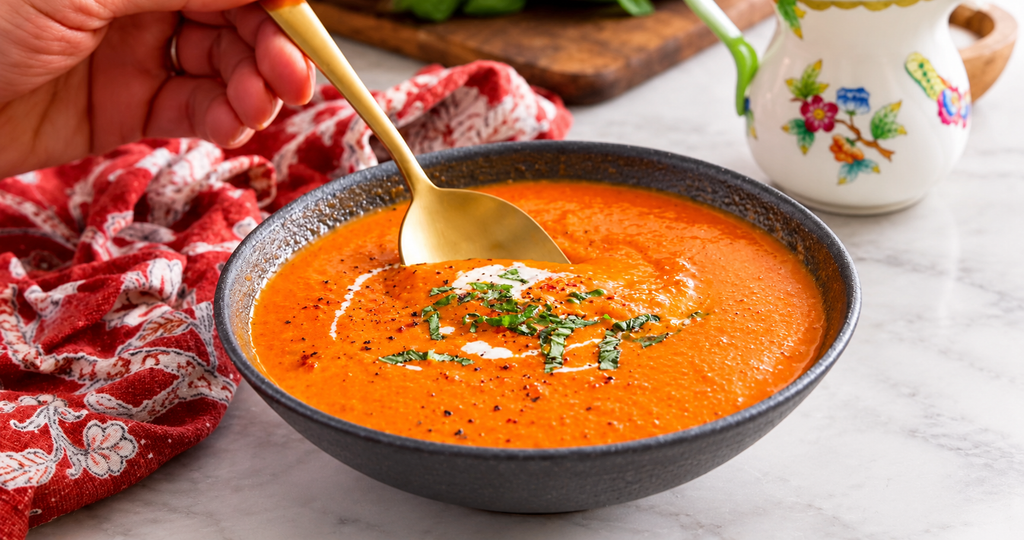
- Serve hot with fresh basil, Parmesan, crusty bread, or a grilled cheese sandwich.