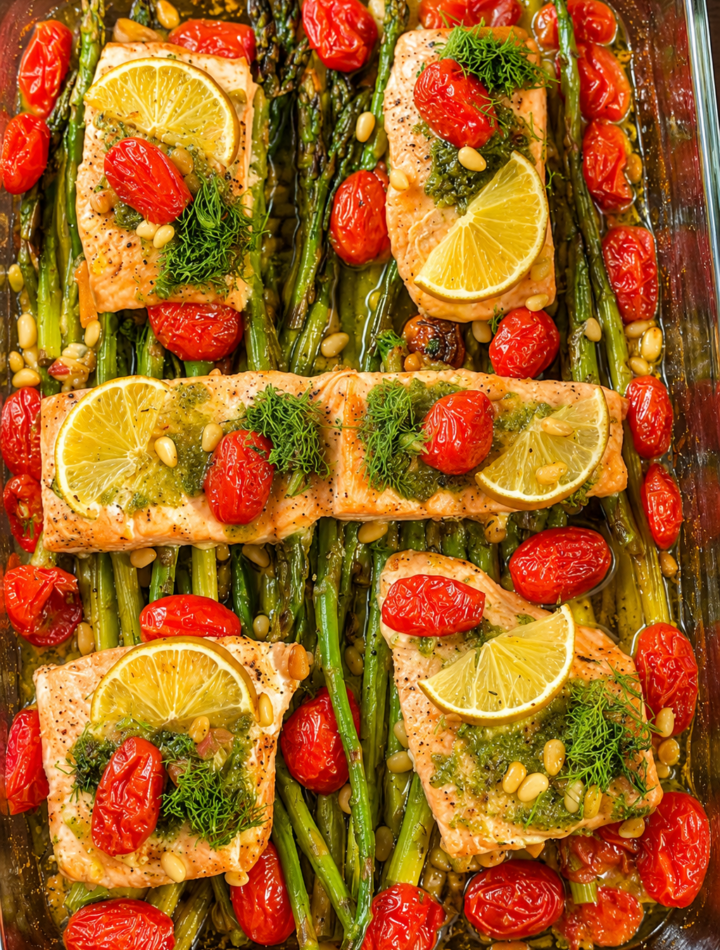
If you want a dinner that brings together flaky salmon, roasted vegetables, and fluffy quinoa on one plate, this Baked Salmon recipe is a practical choice for a busy evening. The salmon is seasoned with garlic, Italian seasoning, lemon juice, salt, and black pepper before it goes into the oven alongside colorful vegetables.
The vegetables develop lightly browned edges while the salmon cooks until tender and flakes easily with a fork. Served over cooked quinoa, the finished meal has a satisfying mix of textures without requiring complicated preparation.
This recipe makes a balanced-looking dinner with salmon, broccoli, zucchini, carrots, and quinoa, and the preparation is straightforward enough for a regular weeknight.
Why You’ll Like This Baked Salmon Recipe
This isn’t a recipe that depends on a complicated sauce or a long ingredient list. The seasoning does most of the work, while lemon adds brightness to the salmon and roasted vegetables.
A few details make the meal particularly convenient:
Salmon cooks in about 15–18 minutes.
Vegetables roast alongside the fish.
Quinoa can be prepared separately while the oven is heating.
Garlic and Italian seasoning give the salmon plenty of flavor.
The vegetables add color and texture to the plate.
An extra squeeze of lemon at the end freshens the entire dish.
For an even easier dinner, cook a larger batch of quinoa ahead of time and keep it refrigerated until you’re ready to assemble the meal.
Baked Salmon Ingredients
For the Salmon and Vegetables
5 oz salmon fillet
1 cup broccoli florets
½ cup zucchini, sliced
½ cup carrots, sliced
1 teaspoon olive oil
Juice of ½ lemon
1 teaspoon garlic powder
1 teaspoon Italian seasoning
Salt, to taste
Black pepper, to taste
For Serving
½ cup cooked quinoa
Extra lemon wedges, optional
Fresh herbs, optional
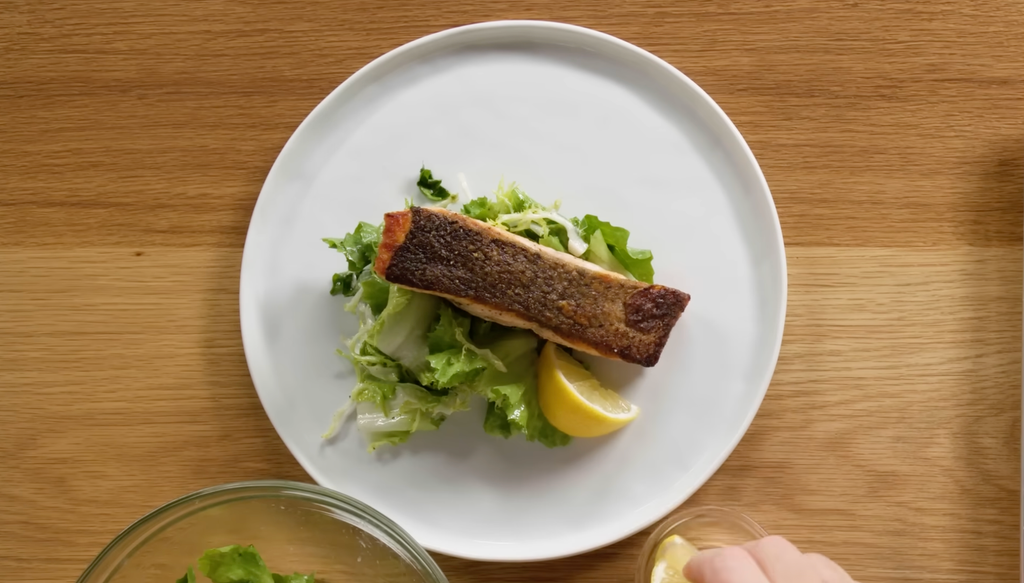
The recipe image uses quinoa as the base for the salmon and roasted vegetables. You can cook the quinoa according to the package directions while the salmon and vegetables are being prepared.
How to Make Baked Salmon
- Heat the Oven
Preheat your oven to 400°F (205°C).
Allow the oven to reach the correct temperature before placing the salmon inside. Starting in an underheated oven can extend the cooking time and make it harder to judge when the fish is ready.
- Season the Salmon
Place the salmon fillet on a baking sheet.
Season it with garlic powder, Italian seasoning, salt, and black pepper. Finish with a squeeze of fresh lemon juice.
Try to distribute the seasonings evenly across the surface rather than concentrating everything in one spot.
- Prepare the Vegetables
Add the broccoli, zucchini, and carrots to a bowl.
Toss them with olive oil, salt, black pepper, and a small amount of garlic powder.
Make sure the vegetables are lightly coated rather than heavily covered in oil. Excess oil can make the vegetables greasy instead of allowing their edges to roast properly.
- Arrange Everything for Baking
Place the seasoned vegetables around the salmon on the baking sheet.
Spread them out as much as possible. Crowding the vegetables can cause them to release moisture and steam rather than develop browned edges.
- Bake
Place the baking sheet in the preheated oven.
Bake the salmon and vegetables for approximately 15–18 minutes, or until the salmon flakes easily with a fork and the vegetables are tender.
The exact cooking time can vary depending on the thickness of the salmon fillet and the size of the vegetable pieces.
- Cook the Quinoa
While the salmon is baking, prepare the quinoa according to the package instructions.
Once cooked, fluff it gently with a fork rather than stirring it aggressively. This helps keep the grains separate.
- Assemble the Bowl
Spoon the cooked quinoa onto a plate or shallow bowl.
Place the baked salmon over the quinoa and arrange the roasted broccoli, zucchini, and carrots around it.
Finish with another squeeze of lemon and fresh herbs if desired.
Serve immediately.
Important Pointers for Better Baked Salmon
Choose a Salmon Fillet With Similar Thickness
A thicker piece of salmon will naturally require more time than a thin fillet. If your piece varies considerably in thickness, the thinner portion may finish first.
Don’t Overcrowd the Vegetables
Give the broccoli, zucchini, and carrots some breathing room on the baking sheet. When vegetables are packed tightly together, moisture can collect around them and interfere with browning.
Cut Vegetables With Cooking Time in Mind
Carrots are firmer than zucchini and generally take longer to soften. Keeping the carrot slices reasonably thin helps the vegetables finish closer to the same time.
Add Lemon at the End Too
The recipe uses lemon before baking, but a fresh squeeze after cooking gives the finished salmon a brighter flavor.
Watch the Salmon Toward the End
Don’t rely exclusively on the clock. Salmon thickness, oven performance, and starting temperature can all affect the cooking time.
Cooking Mistakes to Avoid
- Baking the Salmon Too Long
Salmon can become dry when overcooked. Begin checking toward the end of the suggested cooking window rather than automatically extending the cooking time.
- Using Too Much Oil
The vegetables only need a light coating. Excess oil can make the finished vegetables heavy and greasy.
- Cutting the Vegetables Too Large
Large carrot pieces may remain firm while the zucchini is already tender. Keep the vegetables relatively uniform, with firmer vegetables cut a little smaller.
- Crowding the Baking Sheet
Too many vegetables packed onto one tray can trap steam. Spread them out for better roasting.
- Forgetting to Season the Vegetables
The salmon has several flavorful seasonings, but the vegetables need seasoning too. Salt, pepper, olive oil, and garlic powder are enough to give them a pleasant savory flavor.
- Starting With a Cold Oven
The recipe is designed around a 400°F oven. Preheating first gives you a more predictable cooking environment.
- Cutting Into the Salmon Too Early
Let the salmon rest briefly after removing it from the oven. This gives the juices a moment to settle before serving.
How toTell When Salmon Is Done
The salmon should look opaque and should flake easily with a fork when cooked.
Because fillets vary in thickness, cooking time should be treated as a guide rather than an absolute rule. For the most reliable result, use a food thermometer and follow the USDA’s recommended safe internal temperature for fish.
If the salmon is still translucent in the thickest part and doesn’t flake easily, it needs additional cooking time.
Easy Ways to Customize This Dinner
You don’t have to make the same vegetable combination every time.
Try replacing or adding vegetables such as:
Bell peppers
Green beans
Asparagus
Cauliflower
Brussels sprouts
Cherry tomatoes
You can also change the grain. Brown rice, couscous, or another cooked grain can replace quinoa if that’s what you have available.
For extra flavor, add a spoonful of your favorite dressing or a fresh herb garnish after baking.
How to Store Leftovers
Allow the salmon, vegetables, and quinoa to cool before transferring them into airtight containers.
Store them in the refrigerator and use within 3–4 days for best quality.
For meal prep, you can portion the quinoa, vegetables, and salmon into separate or divided containers. Keeping the components organized makes reheating easier and helps prevent the vegetables from becoming unnecessarily soggy.
Reheating Instructions
For the best texture, reheat the salmon gently rather than blasting it with high heat.
Oven
Place the salmon, quinoa, and vegetables in an oven-safe dish. Cover loosely with foil and warm at around 300°F (150°C) until heated through.
Microwave
Place the leftovers in a microwave-safe container and cover loosely. Heat in short intervals, checking between each interval.
If possible, add a few drops of water to the quinoa before reheating to help prevent it from drying out.
Avoid repeatedly reheating the salmon, as this can make the fish firm and dry.
What to Serve With Baked Salmon
This recipe already includes quinoa and roasted vegetables, so it works well as a complete plate. If you’re serving it for guests, you can add a simple side such as:
Fresh green salad
Lemon wedges
Roasted potatoes
Steamed vegetables
Cucumber salad
A little fresh parsley or another herb on top can also make the finished dish look more vibrant.
Frequently Asked Questions
Can I use frozen salmon?
Yes, but thawing the salmon first makes the cooking time easier to control. Pat it dry before seasoning so excess moisture doesn’t interfere with roasting.
Can I prepare the quinoa ahead of time?
Yes. Cooked quinoa can be prepared in advance and refrigerated, making this dinner faster to assemble on busy days.
Can I use different vegetables?
Absolutely. Broccoli, zucchini, and carrots are used in the recipe, but you can substitute vegetables based on what’s available. Keep in mind that different vegetables have different cooking times.
Can I make this recipe without quinoa?
Yes. The salmon and roasted vegetables can be served on their own or paired with another cooked grain or side dish.
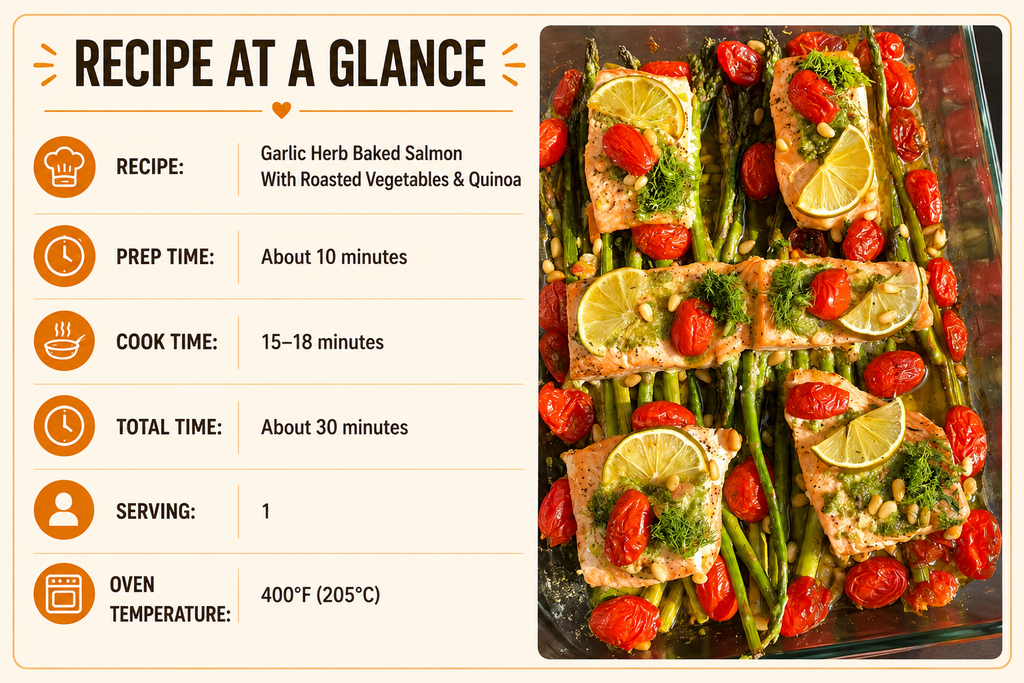
Recipe at a Glance
Recipe: Garlic Herb Baked Salmon With Roasted Vegetables & Quinoa
Prep Time: About 10 minutes
Cook Time: 15–18 minutes
Total Time: About 30 minutes
Serving: 1
Oven Temperature: 400°F (205°C)